RISE! Music festival
RISE! Music festival
RISE! Music festival
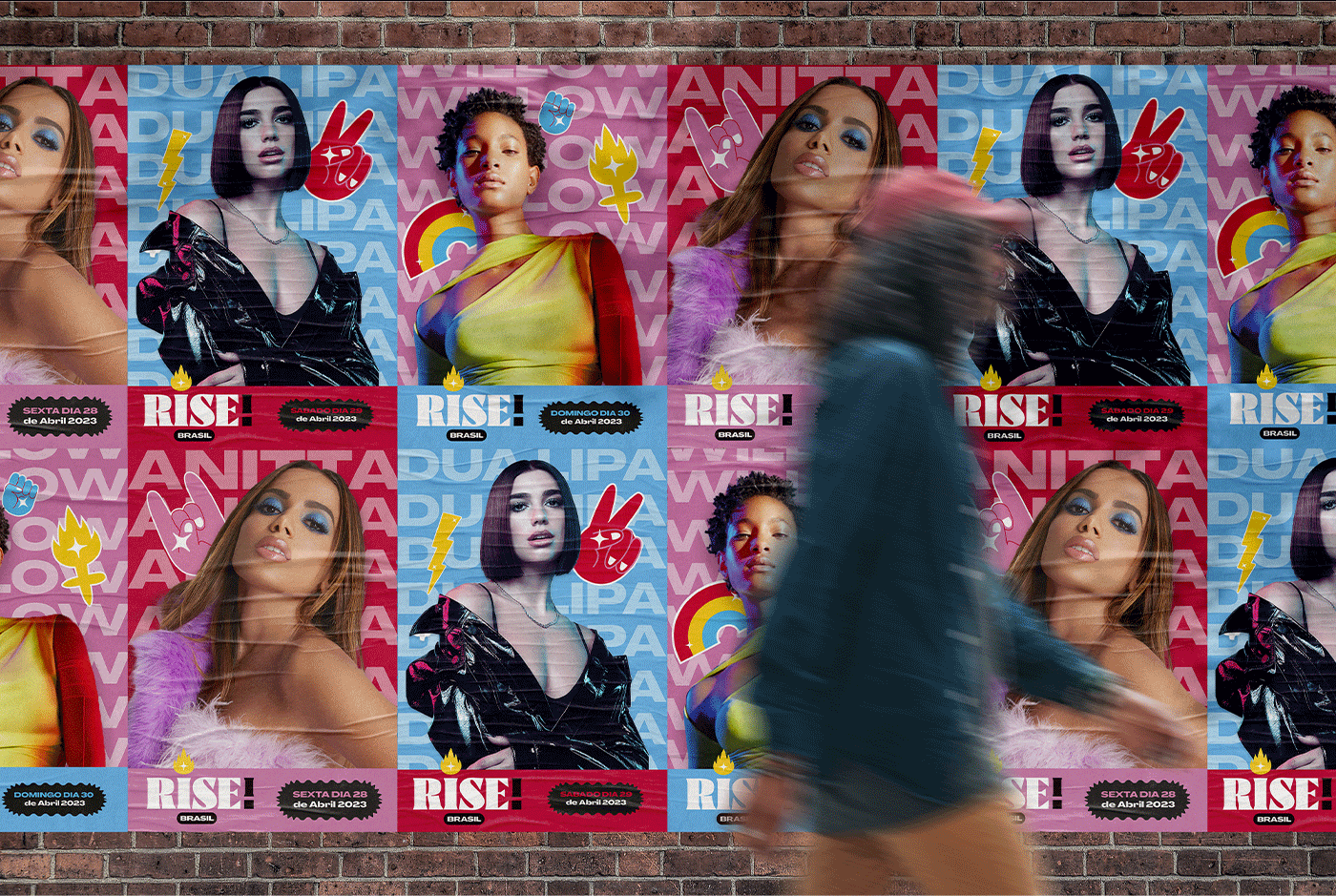
Branding, identity, and illustration for Rise, a fictional all-female music festival born from a real representation problem
Branding, identity, and illustration for Rise, a fictional all-female music festival born from a real representation problem
Year: 2021
College thesis
Role: Designer, ilustrator, brand manager
Graphic design
Branding
Ilustration
Overview
Overview
Rise Festival was my capstone project for my Bachelor's degree in Communication Design at PUCRS.
It started with a clear, uncomfortable data point: across most of Brazil's largest music festivals, roughly 80% of lineups were composed of male artists, a gap confirmed not just through feminist research and academic sources, but through news coverage from that period as well. That imbalance became the starting point for a fictional festival built entirely around female artists, from its lineup to every piece of its visual and written communication.
It's important to be clear about what that means: while the lineup is exclusively female, Rise is not exclusionary. The festival welcomes people of every gender to attend, celebrate, and dance alongside the artists. The goal was never to shut anyone out, it was to elevate women to the same level of visibility and importance long given to male artists, treating equality as something to celebrate together, not something reserved for one group.
The name "Rise" carries three layers of meaning at once. It's a tribute to Maya Angelou, referencing her poem And Still I Rise. It's also a call to stand up, to rebel, to fight for something worth fighting for.
In the more literal sense of a music festival, it's an invitation to rise and dance, to feel free, to let go. Tying the brand together is the flame symbol, chosen specifically to represent a "flame of hope", carrying that same idea of resilience and possibility across everything the festival communicates.
Rise Festival was my capstone project for my Bachelor's degree in Communication Design at PUCRS.
It started with a clear, uncomfortable data point: across most of Brazil's largest music festivals, roughly 80% of lineups were composed of male artists, a gap confirmed not just through feminist research and academic sources, but through news coverage from that period as well. That imbalance became the starting point for a fictional festival built entirely around female artists, from its lineup to every piece of its visual and written communication.
It's important to be clear about what that means: while the lineup is exclusively female, Rise is not exclusionary. The festival welcomes people of every gender to attend, celebrate, and dance alongside the artists. The goal was never to shut anyone out, it was to elevate women to the same level of visibility and importance long given to male artists, treating equality as something to celebrate together, not something reserved for one group.
The name "Rise" carries three layers of meaning at once. It's a tribute to Maya Angelou, referencing her poem And Still I Rise. It's also a call to stand up, to rebel, to fight for something worth fighting for.
In the more literal sense of a music festival, it's an invitation to rise and dance, to feel free, to let go. Tying the brand together is the flame symbol, chosen specifically to represent a "flame of hope", carrying that same idea of resilience and possibility across everything the festival communicates.
Audience research
Audience research
Rise started from a personal place, a genuine passion for music and feminism, combined with something I couldn't ignore once I started paying attention: a real, measurable gap between male and female artists on the biggest festival lineups in the country.
To understand who this festival was actually for, I began by researching Gen Z consumption behavior, a generation increasingly drawn to products that don't just represent who they are, but carry a deeper meaning behind them. Based on that, I ran a quantitative survey to confirm the hypothesis that this audience would fall primarily within that age group, followed by qualitative interviews with around 7 people to understand what would actually draw someone to a festival like Rise over any other.
That research confirmed the core thesis behind the project: this audience wants to have fun, but they also want to know they're supporting something positive along the way, a festival they can feel represented by and genuinely proud to be part of.
Rise started from a personal place, a genuine passion for music and feminism, combined with something I couldn't ignore once I started paying attention: a real, measurable gap between male and female artists on the biggest festival lineups in the country.
To understand who this festival was actually for, I began by researching Gen Z consumption behavior, a generation increasingly drawn to products that don't just represent who they are, but carry a deeper meaning behind them. Based on that, I ran a quantitative survey to confirm the hypothesis that this audience would fall primarily within that age group, followed by qualitative interviews with around 7 people to understand what would actually draw someone to a festival like Rise over any other.
That research confirmed the core thesis behind the project: this audience wants to have fun, but they also want to know they're supporting something positive along the way, a festival they can feel represented by and genuinely proud to be part of.
This understanding was crucial in shaping the kind of communication Rise needed: playful, energetic, and modern, but always aligned with the ideals the festival stands for, never letting the visual language overshadow or distract from the real reason Rise exists.
This understanding was crucial in shaping the kind of communication Rise needed: playful, energetic, and modern, but always aligned with the ideals the festival stands for, never letting the visual language overshadow or distract from the real reason Rise exists.
Results




Check out more of my works